How I Use Semrush to Drive Real SEO Growth
In this blog, I’m sharing my exact daily process for using Semrush, the metrics I focus on, and the tangible improvements I’ve seen across my websites.

If there is one tool that sits at the center of my SEO workflow across every brand, it’s Semrush.
Not because it’s popular. Not because I’m an Ambassador. But because it drives predictable, repeatable, measurable SEO results.
In this blog, I’m sharing my exact daily process for using Semrush, the metrics I focus on, and the tangible improvements I’ve seen across my websites.
Let me show you how I do it.
1. Site Audit: Finding the Hidden Problems That Hurt Growth
If I had to choose only one Semrush feature for the rest of my SEO career, it would be Site Audit.
Why? Because every website has hidden issues. And fixing those issues unlocks ranking potential faster than publishing new content.
Here’s a real example from one of my recent audits:
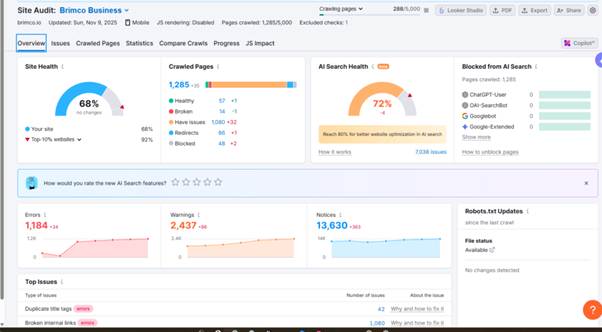
When I ran the audit, Semrush flagged:
- 6,737 links with missing anchor text
- 1,184 site errors
- 2,437 warnings
- 5,277 notices
These weren’t visible on the surface.
But they were quietly hurting crawlability, internal authority flow, and AI visibility.
How I fixed it:
- Rebuilt category templates
- Added descriptive, intent-based anchor text
- Optimized link structures
- Cleaned up broken markup
The outcome:
- Site Health improved from 68% → 71%
- AI Search Health enhanced from 72% → 76%
- Organic traffic increased by +187% over two months
This is why I trust Semrush audits; they reveal what you don’t see.
2. Keyword Research: But Not the Old Way
Traditional keyword research is dead.
Modern keyword research is intent + context + opportunity.
Here’s how I use Semrush to do it:
Using the Keyword Gap Tool
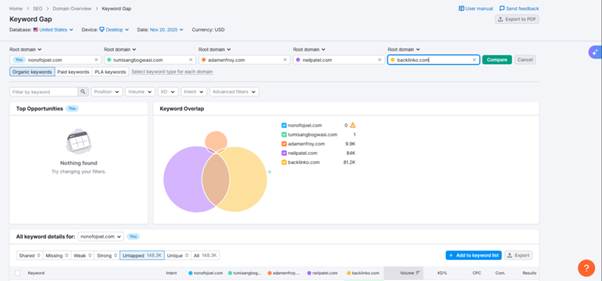
This tells me instantly:
- What competitors rank for
- What they don’t rank for
- Where can I win faster
- What content clusters to prioritize
I don’t guess topics with the keyword gap, I validate them.
Using the Keyword Magic Tool
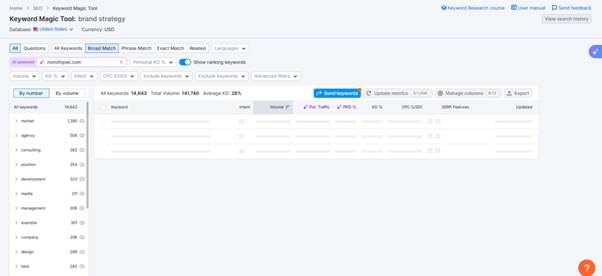
This is where I build:
- Long-tail opportunities
- Question-based queries
- AI-friendly content clusters
This tool alone helps me create full SEO strategies in under an hour.
Using the Keyword Strategy Builder
Using Semrush’s Keyword Strategy Builder
One of the most powerful additions to my workflow is the Keyword Strategy Builder, a feature that helps me turn scattered keyword ideas into a structured, strategic roadmap.
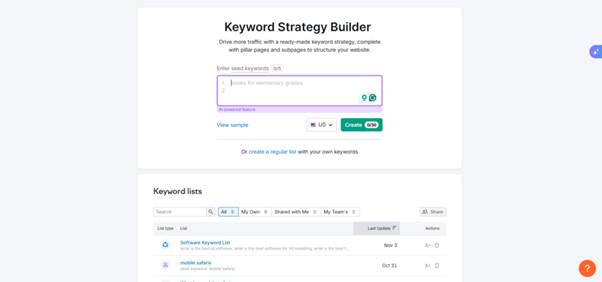
This is perfect when I need to:
- Build a new content hub
- Organize keyword research at scale
- Prioritize high-impact topics
- Map content to funnel stages
- Create a cluster strategy in minutes
Here’s how I use it:
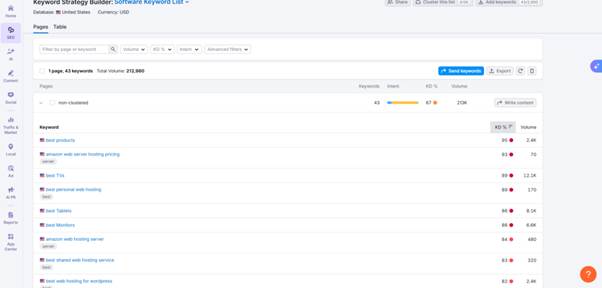
Step 1: Add Core Keywords
I drop in a mix of:
- Primary target keywords
- Questions from Keyword Magic Tool
- Competitor keywords from Keyword Gap
The tool automatically groups them into themes.
Step 2: Review Suggested Clusters
Semrush identifies natural clusters based on:
- Search intent
- Keyword similarity
- SERP overlap
- Ranking difficulty
This saves me hours of manual grouping.
Step 3: Prioritize by Opportunity
I filter by:
- Volume
- Difficulty
- Intent
- SERP features
This helps me decide:
- What to write first
- What to optimize next
- Which clusters need supporting content
Step 4: Export the Strategy
I share the strategy with:
- My writers
- My content teams
- Or plug it into my editorial calendar
Why It Matters
The Keyword Strategy Builder is more than research, it’s content architecture. It takes raw keywords and transforms them into:
- Topic clusters
- Subtopics
- Supporting articles
- Internal linking paths
- Funnel-aligned content maps
This is how I build scalable SEO systems across all my brands.
3. Content Planning & Optimization
Before I publish anything, even blogs like this, I run my drafts through Semrush’s SEO Writing Assistant.
Why? Because it gives me:
- Readability insights
- Tone checks
- Keyword balance
- Suggested semantically related terms
- Competitor data
- Even an option to add my blog images from AI-generated images, Canva to Unsplash
It doesn’t replace my writing; it enhances it, and it makes my writing process really smooth.
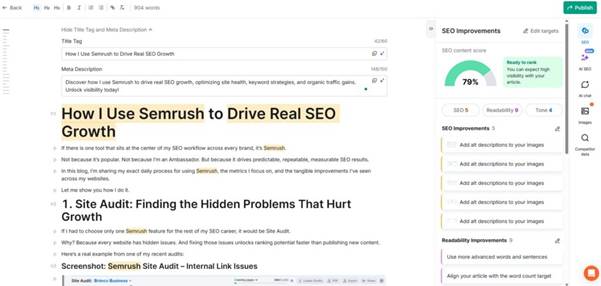
This tool ensures every piece of content is:
- Factually aligned
- Intent-driven
- Optimized for both Google and AI search
4. Position Tracking: Because What You Don’t Measure Won’t Improve
After optimizing content, I track:
- Daily ranking changes
- Visibility across devices
- Competitor movements
- Featured snippet wins
Semrush’s Position Tracking lets me see what’s working—and what needs refinement.
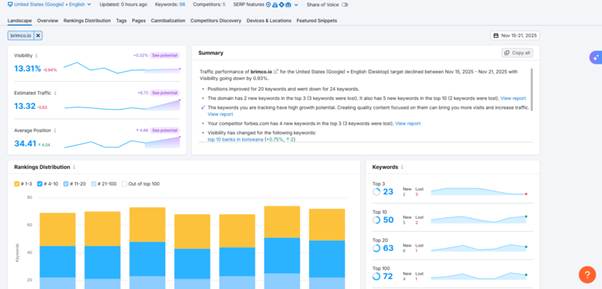
This helps me understand:
- Which clusters to update
- Which keywords are gaining traction
- Where to expand content
It’s like having a daily SEO health monitor.
5. AI + Semrush = My 2025 SEO Workflow

I use AI for:
- Content ideation
- Cluster mapping
- Faster draft creation
- SERP interpretation
But I rely on Semrush for:
- Validation
- Strategy
- Technical accuracy
- Performance measurement
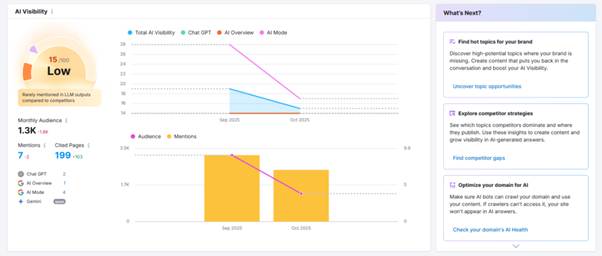
Together, they give me the speed of AI with the precision of real SEO intelligence. The Semrush One plan gives me all the results i need to make the right choices when it come to the contne I write.
6. Real Results From My Semrush Workflow
Across my brands, this workflow has helped me:
- Grow organic traffic with no ad spend
- Recover underperforming content
- Improve site health across all properties
- Build stronger internal linking systems
- Strengthen entity signals for AI search
SEO still works when it’s done with data, structure, and clarity.
Semrush gives me the roadmap. AI gives me the leverage. I bring the strategy.
Final Thoughts
I use Semrush every day because it delivers real, measurable improvements across every brand I manage.
Whether you’re a marketer, founder, or creator, Semrush is not just an SEO tool it’s a visibility engine.