The Competitor Traffic Trap: Why More Site Visitors Doesn’t Always Mean More Success


A competitor with 1 million monthly visitors might look intimidating.
At first glance, it feels like they have already won the market. They appear bigger, louder, and more visible. Their website seems to attract the kind of attention every brand wants.
But here is the part many business owners, marketers, and founders miss:
A competitor with 1 million visitors can be less dangerous than one with 100,000 highly engaged users.
Because traffic is not the same as traction.
Traffic tells you how many people arrived. It does not tell you whether they cared, trusted, explored, subscribed, enquired, booked, bought, or came back. And in digital strategy, those actions matter far more than the raw number of visitors sitting inside an analytics dashboard.
This is the competitor traffic trap: assuming that more visitors automatically means more success.
It is an easy trap to fall into because traffic is visible. It is clean. It is impressive. It gives you a number you can compare. But business growth is rarely built on visibility alone. It is built on qualified attention, useful engagement, strong positioning, and conversion paths that turn interest into action.
If you want to understand whether a competitor is truly outperforming you, do not stop at traffic.
Look deeper.
At engagement, bounce rate, Look at pages per visit,Look at visit duration,
Look at whether their audience is actually moving through the website with intent.
That is where the real story begins.
Traffic Is a Signal, Not the Scoreboard
Traffic matters. Let’s be clear about that.
A website with strong organic traffic has usually done something right. It may have built useful content, earned authority, improved search visibility, invested in paid campaigns, developed brand awareness, or created a resource that people keep finding.
So traffic should not be ignored.
But traffic is only a signal. It is not the full scoreboard.
The problem begins when brands treat traffic as the main measure of digital success. They look at competitor numbers and assume:
“They get more visitors, so they must be doing better.”
Not necessarily.
High traffic can come from many sources that do not translate into business value. A website might attract visitors through broad informational content, viral posts, irrelevant keywords, low-intent search queries, accidental clicks, or audiences outside the company’s actual market.
For example, a tourism business might publish a high-ranking article about “best time to visit Africa.” That article could attract thousands of readers from around the world. But if most of those readers are students, casual researchers, or people with no intention of booking a trip, the traffic may look impressive while producing very little revenue.
On the other hand, a smaller competitor ranking for “luxury safari lodge near Chobe for couples” may receive fewer visitors but attract people who are much closer to making a booking decision.
The second audience is smaller.
But it is more valuable.
This is why serious competitor analysis should not ask only, “How much traffic do they get?”
It should ask:
“What kind of traffic are they getting, and what does that traffic appear to do next?”
The Difference Between Traffic and Engagement
Traffic measures arrival.
Engagement measures attention.
That distinction matters because digital growth is not simply about getting people onto a website. It is about getting the right people to interact with the right content in a meaningful way.
A visitor who lands on one page, skims for five seconds, and leaves is technically traffic. But that visit does not carry the same strategic value as someone who reads a full guide, visits your service page, checks your pricing, opens your contact page, and returns two days later.
Both count as visitors.
Only one shows meaningful intent. On many sites, over 97% of website visitors leave without converting.
Engagement helps you understand whether the website is doing its job after the click. It answers questions like:
- Are visitors finding the content useful?
- Are they moving deeper into the site?
- Are they spending enough time to understand the offer?
- Are they exploring related pages?
- Are they taking actions that suggest trust or interest?
This is where many high-traffic websites fall apart. Traffic without engagement is like window shoppers.
They may be good at attracting clicks but weak at holding attention. They may rank for broad keywords but fail to guide people toward meaningful next steps. They may produce content that search engines discover, but readers do not value deeply enough to explore further.
That kind of traffic can inflate the surface of a business while hiding weak performance underneath.
Why High Traffic Can Hide Poor Performance
High traffic can create a false sense of strength.
A competitor may look dominant because their website attracts large visitor numbers. But if those visitors are poorly matched to the business, the traffic becomes more like noise than momentum.
There are several ways this happens.
First, they may be attracting low-intent visitors. These are people who want a quick answer, not a provider, product, destination, or solution. They arrive, get a basic answer, and leave.
Second, their content may be too broad. Broad content can bring volume, but it often struggles to convert unless it is connected to a clear content journey. A business blog filled with general topics may grow traffic while failing to generate qualified leads.
Third, their website may have weak internal pathways. Visitors may enjoy one article but have no clear reason to visit another page, sign up, enquire, or learn more about the brand.
Fourth, the offer may be unclear. If visitors cannot quickly understand who the business serves, what it does, why it is different, and what to do next, traffic will leak away.
Fifth, the website experience may be poor. Slow pages, cluttered layouts, confusing navigation, weak mobile usability, or thin service pages can all damage engagement even when traffic is strong.
This is why high traffic can become a vanity metric.
It looks good in a report, but it does not automatically mean the brand is building trust, demand, authority, or revenue.
Bounce Rate Analysis: What It Can Tell You and What It Cannot
Bounce rate is often misunderstood.
At a basic level, bounce rate shows the percentage of visitors who leave after viewing only one page. A high bounce rate may suggest that visitors are not finding what they need, are not interested enough to continue, or are not being guided toward another meaningful action.
But bounce rate needs context.
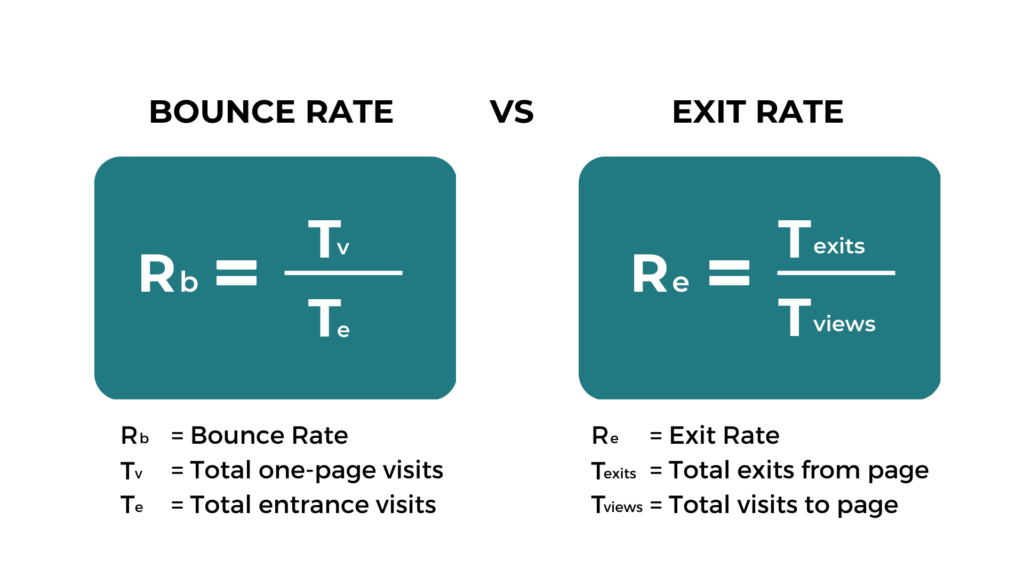
A high bounce rate is not always bad.
If someone searches for a specific answer, lands on a page, finds the answer immediately, and leaves satisfied, that can still be a successful visit. This is especially true for simple informational content.
But in a business context, especially where the goal is lead generation, booking, enquiry, subscription, or product discovery, a consistently high bounce rate can be a warning sign.
It may suggest that the website is attracting the wrong audience.
It may suggest that the page does not match search intent, or that a lack of trust signals is making people leave quickly.
It may suggest that the content is weak, slow, confusing, or poorly structured, and these user experience issues can also reduce conversion rates.
It may also suggest that the page has no strong next step. Trust signals such as testimonials can improve confidence and support conversions.
When analysing a competitor, bounce rate should not be treated as a single verdict. It should be read alongside the page type and likely visitor intent.
A blog post answering a simple question may naturally have a higher bounce rate.
A service page, booking page, pricing page, destination page, or comparison page should usually create more exploration or action.
The real question is not simply, “Is the bounce rate high?”
The better question is:
“Does the bounce rate make sense for the purpose of this page?”
If a competitor has massive traffic but weak engagement across commercially important pages, their traffic may be less threatening than it looks.
Pages Per Visit: The Hidden Clue in Competitor Interest
Pages per visit is one of the most useful engagement signals because it shows whether visitors are moving beyond the first page.
When people view multiple pages, it often means they are trying to understand the brand more deeply. They may be comparing options, checking credibility, exploring services, reading related content, or looking for proof that the business can help them.
This matters because buying decisions rarely happen from one isolated page.
A potential client may start with a blog post, then visit a service page, then read an about page, then check case studies, then open the contact page.
A potential guest may start with a destination guide, then view room types, then explore activities, then check availability.
A nonprofit donor may start with a campaign story, then read the mission page, then visit the impact page, then look for donation options.
Pages per visit helps reveal whether the website has depth and whether visitors are interested enough to keep moving.
A competitor with fewer visitors but higher pages per visit may have a more engaged audience than a competitor with huge traffic and shallow interaction.
This is especially important in industries where trust matters.
For travel, tourism, consulting, nonprofit work, education, and professional services, people often need more than a quick landing page. They need context. They need reassurance. They need to see the thinking behind the offer. They need to understand the experience, the credibility, the process, and the value.
If your competitor’s audience is browsing multiple pages per visit, that may signal stronger intent.
If your audience is doing the same, it is a sign that your content architecture is working.
Visit Duration: Attention Is a Competitive Advantage
Visit duration gives you another important clue: how long people stay.
Again, this metric needs context. Long sessions are not automatically good, and short sessions are not automatically bad.
A visitor may spend a long time on a page because the content is excellent, or because the website is confusing. A visitor may spend a short time because they found the answer quickly, or because they were not interested.
But when read properly, visit duration can help you understand whether visitors are giving the website meaningful attention.
Attention is one of the most valuable assets in modern digital strategy.
Search visibility brings people in. But attention gives you the opportunity to build trust.
If visitors spend time reading a detailed guide, comparing services, watching a video, exploring destination information, or reviewing a product page, they are giving the brand a chance to shape their thinking.
That is powerful.
A website with lower traffic but stronger visit duration may be building deeper trust than a high-traffic competitor whose visitors leave quickly.
This is why content quality matters.
Thin content may rank for a while, but it rarely holds attention. Generic pages may attract visitors, but they do not help people make better decisions. Shallow articles may bring clicks, but they do not build authority.
Strong content does more.
It teaches.
It clarifies.
It reduces uncertainty.
It gives the reader language for their problem.
It helps them compare options.
It positions the brand as useful before asking for anything.
That is the kind of content that earns time.
And time, when matched with the right audience, often precedes trust.
Why Quality Beats Quantity in Website Traffic
Quantity asks, “How many people came?”
Quality asks, “Were they the right people, and did the visit matter?”
That is the more important question.
A website does not need every possible visitor. It needs the right visitors: people with the right problem, interest, location, budget, timing, need, or intent.
This is especially true for businesses that sell high-consideration products or services. A consulting firm does not need millions of casual readers. It needs decision-makers who understand the value of strategic help. A lodge does not need traffic from people who will never travel.
It needs travellers who are actively planning, comparing, and ready to book. A nonprofit does not need random pageviews. It needs supporters, partners, donors, volunteers, and advocates who care enough to act.
Quality traffic usually has several characteristics.
- Comes from relevant search intent.
- Matches the business model.
- Engages with useful content.
- Explores deeper pages.
- Returns over time.
- Takes meaningful actions because effective websites use clear, low-risk calls to action.
- More likely to convert, refer, subscribe, enquire, or buy.
This is why a smaller competitor can be more dangerous than a larger one.
If their audience is more qualified, more engaged, and more likely to act, they may be building a stronger business engine even with fewer total visitors.
Traffic volume can make a brand visible.
Traffic quality makes a brand effective. Websites that focus on clear CTAs also tend to achieve higher conversion rates.
The Strategic Mistake: Chasing Competitor Traffic Without Understanding It
One of the most common mistakes in competitor analysis is copying what appears to be working.
- A competitor ranks for a broad topic, so you write the same kind of article.
- A competitor publishes constantly, so you increase your publishing volume.
- A competitor gets high traffic from informational keywords, so you chase the same keywords.
But if you do not understand whether that traffic is valuable, you may end up copying their weakness.
This is how businesses build content systems that look busy but produce little.
They publish for volume instead of intent, build blogs full of loosely related topics, celebrate traffic growth while enquiries remain flat and attract readers who never become customers.
They also increase content output without improving content strategy.
The better approach is to study competitors with a sharper lens.
Do not ask only, “What topics bring them traffic?”
Ask:
- Which topics likely attract buyers, clients, guests, donors, or serious decision-makers?
- Which pages appear to support conversion?
- Which content connects naturally to the brand’s services or offers?
- Which pages are likely creating trust, not just visits?
- Where does the competitor’s content journey become weak?
- What questions are they answering poorly or not answering at all?
This turns competitor analysis from imitation into strategy.
How to Analyse Competitor Traffic More Intelligently
You do not need perfect data to make better decisions. Competitor analytics tools are estimates, and they should be treated as directional rather than absolute. A traffic drop does not always mean a drop in relevance.
More detailed comparison tools you can use include the Semrush Traffic and Market Tool that allows you to monitor competitors activities in real time, on social media, and their websites.
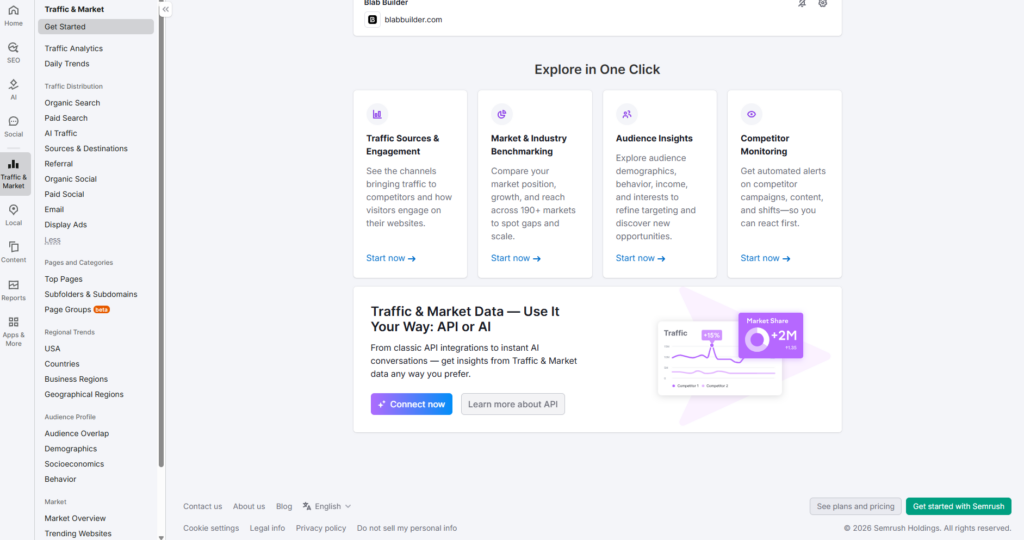
But even directional analysis can be useful when you know what to look for.
Start with traffic volume, but do not stop there. Use Google Analytics and other sources to compare metrics in context, including sessions and unique visitors.
Over half of website traffic can come from bot activity. AI bots now account for a significant share of web requests, and a bot may evaluate your pages before potential buyers arrive. This is one reason technical SEO, entity clarity, and brand signals for AI visibility are reshaping how visibility is measured.
Look at where the traffic appears to come from.
Is it organic search, paid search, social media, referrals, direct visits, or a mix?
A competitor dependent on paid traffic may have a different strength than one earning consistent organic visibility.
Study the top pages. Are they educational blog posts, product pages, destination guides, comparison pages, tools, resources, or service pages?
This helps you understand whether traffic is informational, commercial, navigational, or transactional. Many users now get answers without clicking through to websites as AI-powered search visibility increasingly shapes how people discover brands.
Evaluate search intent. Are visitors likely to be casually researching, solving an immediate problem, comparing providers, or preparing to buy?
Intent often matters more than volume.
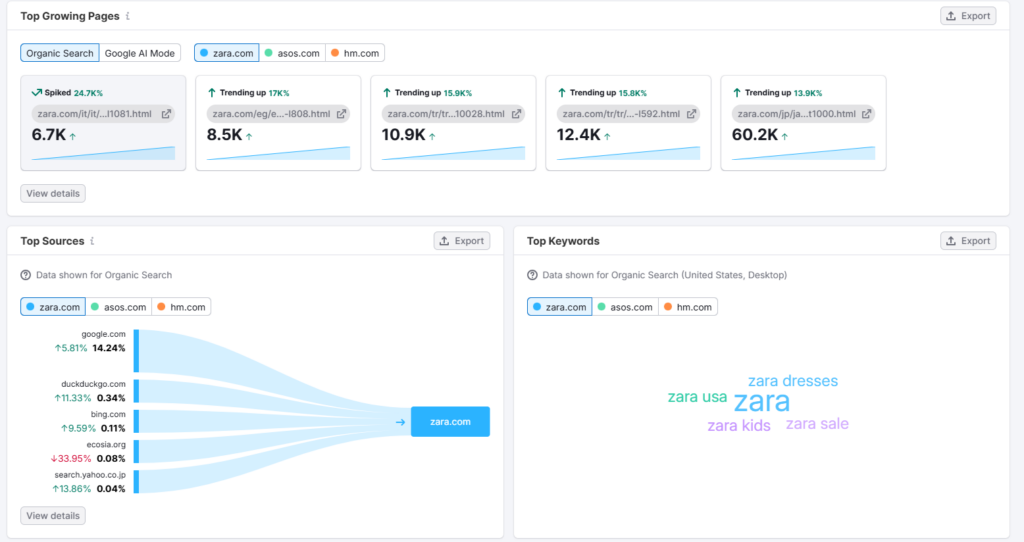
Check engagement signals where available. Bounce rate, pages per visit, and visit duration can help you see whether visitors are staying, exploring, or leaving quickly.
Look for conversion pathways. Does the competitor guide visitors from content to service pages, lead magnets, booking forms, demos, consultations, newsletters, or enquiries?
If the journey is weak, high traffic may be leaking.
Compare content depth. Does the competitor answer the topic thoroughly?
Do they provide examples, frameworks, original insight, or practical next steps? Thin content may bring visits, but strong content builds trust.
Assess brand clarity. When visitors arrive, is it immediately clear who the business serves, what it offers, and why it should be trusted? If not, traffic may not translate into demand.
The goal is not to envy a competitor’s numbers.
The goal is to understand the quality of their digital presence and identify where you can build something stronger.
A Simple Framework: Volume, Intent, Engagement, Action
When judging competitor traffic, use four layers.
1. Traffic Volume
How many people are visiting?
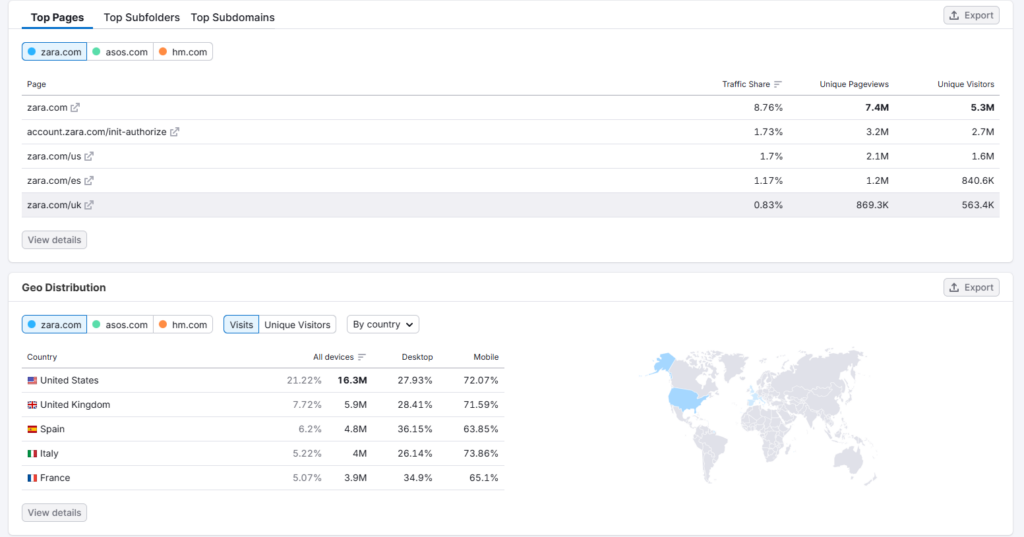
This gives you a sense of visibility and market reach. But treat it as the beginning of the analysis, not the conclusion, because AI bots account for a significant share of web traffic.
The right benchmark depends on the scale of the business, the average for its industry, how many unique visitors you attract, and whether those visits come from steady daily visitors rather than inflated totals.
2. Intent
Why are people visiting?
Are they looking for general information, specific advice, a product, a provider, a booking option, a solution, or a comparison?
Intent tells you whether the traffic has business potential.
3. Engagement
What do visitors appear to do after they arrive?
This is where bounce rate, pages per visit, and visit duration become useful. Engagement shows whether the site is holding attention and encouraging exploration.
4. Action
What meaningful next step does the website encourage?
This could be an enquiry, a booking, a purchase, a subscription, a download, a consultation request, a donation, or a return visit. Friction in those actions matters, so fix avoidable barriers; for example, each additional field in a contact form can reduce conversion rates.
Action is where traffic begins to become business value.
A competitor who is strong across all four layers deserves serious attention.
But a competitor who is strong only in volume may not be as dangerous as they appear.
Using Semrush’s Traffic And Market Analysis
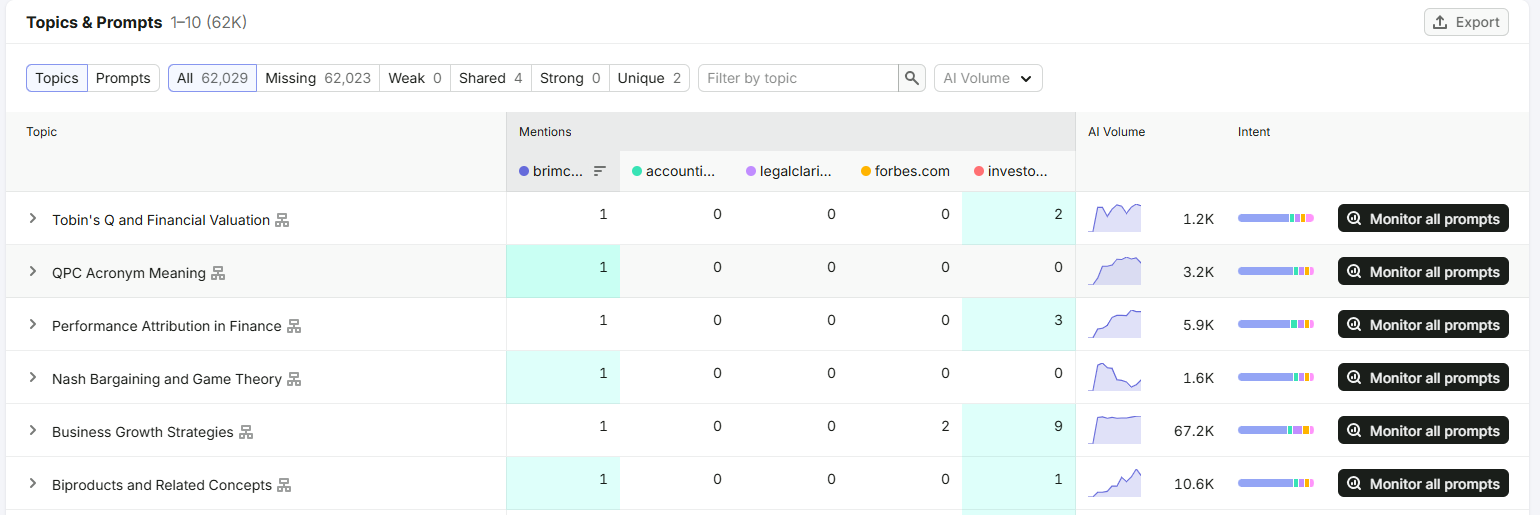
This is where Semrush’s Traffic & Market Analysis becomes especially useful.
Instead of looking at a competitor’s website as a single domain with traffic numbers attached to it, you can use the tool to study the wider market around that domain.
That distinction matters.
A domain overview tells you how one competitor is performing.
Market analysis helps you understand the competitive environment in which they are operating.
Traffic Journey helps you see where visitors came from and where they go next.
When you combine those views, competitor research becomes much more strategic.
You are no longer asking only:
“How much traffic does this competitor get?”
You are asking:
“What role does this competitor play in the market, where does their audience come from, who else owns attention, and what happens after people visit their site?”
That is a much better foundation for SEO, content strategy, partnerships, and growth planning.
Start With The Domain Overview
The Domain Overview gives you the first layer of context.
Here, you can look at metrics such as:
- Total visits
- Unique visitors
- Pages per visit
- Average visit duration
- Bounce rate
- Purchase conversion
- Main traffic channels
- Traffic trends over time
This gives you a quick sense of scale and engagement.
But the goal is not simply to admire the biggest number.
The goal is to interpret what the numbers suggest.
For example, if a competitor gets strong traffic but has a high dependency on one channel, that may signal risk. If most of their traffic comes from direct and organic search, they may have strong brand awareness and search visibility.
If referral traffic plays a meaningful role, partnerships, media mentions, affiliates, or third-party platforms may be part of their growth engine.
This is why you should not look at traffic volume in isolation.
A competitor with fewer visits but stronger engagement may be more strategically dangerous than a competitor with large but shallow traffic.
The question is not only, “Who gets the most visitors?”
The better question is:
“Which competitor is attracting the right visitors, keeping them engaged, and moving them closer to action?”
Use Market Overview To See The Competitive Landscape
After reviewing the individual competitor, zoom out into the market.
Semrush’s Market Overview helps you identify:
- Total market traffic
- Market audience size
- Key competitors
- Market share
- Growth patterns
- Market leaders
- Emerging players
- Competitor positioning
This is where the research becomes more useful.
Sometimes a competitor looks dominant when you analyse them alone. But when you place them inside the full market, you may discover that they only control a small share of total demand.
Other times, a brand may not have the highest traffic, but it may be growing faster than the established market leader.
That matters.
A market leader shows you where attention is concentrated today.
A fast-growing competitor may show you where the market is moving next.
This is especially important when planning a content strategy.
If the market is dominated by a few large players, copying their broad content strategy may not be realistic. You may need to find more specific angles, underserved questions, comparison opportunities, local intent, niche audience segments, or high-trust content formats.
Market analysis helps you avoid building a strategy in a vacuum.
You can see whether you are entering a mature market, a fragmented market, a fast-growing market, or a market where one brand controls a large portion of attention.
Each situation requires a different strategy.
Study Audience Demographics And Overlap
Traffic numbers tell you how many people are visiting.
Audience data helps you understand who those people are.
In Semrush, audience insights can help you review signals such as:
- Age distribution
- Gender split
- Socioeconomic indicators
- Audience interests
- Social platforms the audience uses
- Other domains the audience visits
This is valuable because two competitors can operate in the same category while attracting slightly different audiences.
One may attract price-sensitive buyers, another may attract premium buyers, and one may attract researchers and comparison shoppers. There is one that may be attracting loyal repeat customers.
That difference should shape your content.
- If the audience is heavily influenced by YouTube, video explainers may matter.
- If they are active on Reddit, community sentiment and honest comparison content may matter.
- If they spend time on LinkedIn, expert-led thought leadership may carry more weight.
- If they frequently visit review platforms, trust signals and proof may be central to conversion.
This is where audience analysis connects directly to brand strategy.
You are not only identifying where people go.
You are identifying what kind of proof, language, format, and trust environment they may need before making a decision.
Use Traffic Journey To Find The Hidden Opportunity
Traffic Journey is one of the most useful parts of the workflow because it shows movement.
You can see the top sources sending visitors to a competitor and the top destinations visitors go to after leaving.
This helps answer two powerful questions:
Where did attention come from?
Where did attention go next?
If a large share of visitors comes from Google, organic search is clearly part of the acquisition engine.
But if many visitors leave and go back to Google, visit Amazon, check PayPal, open YouTube, browse Instagram, or move toward another competitor, that movement tells a story.
It may suggest that visitors are:
- Comparing prices
- Looking for reviews
- Checking availability
- Seeking video explanations
- Searching for discount codes
- Validating trust
- Looking for alternative suppliers
- Returning to search because their question was not fully answered
This is the intelligence most marketers miss.
The page got the visit, but the journey reveals the hesitation.
And hesitation is where content strategy becomes useful.
- If people leave to compare, create comparison content.
- If they leave to validate, build stronger proof.
- If they leave for video, create better visual explanations.
- If they leave for reviews, improve reputation assets.
- If they leave for another marketplace, clarify your value proposition.
- If they return to search, answer the next question before they have to ask it elsewhere.
That is how you move from reporting to strategy.
Compare Channels Across Competitors
The next step is benchmarking traffic channels across competitors.
This helps you understand how each brand wins attention.
One competitor may depend heavily on organic search.
Another may have stronger direct traffic.
Another may rely on referrals.
Another may be more active in paid search or social.
Another may gain traction through email or partnerships.
This matters because channel mix often reveals business model, brand strength, and growth risk.
A brand with strong direct traffic may have stronger brand recall.
A brand with strong organic traffic may have a mature SEO engine.
A brand with strong referral traffic may have valuable partnerships or media visibility.
A brand with strong paid traffic may be buying demand rather than earning it.
A brand with strong social traffic may have community momentum or creator-led visibility.
Once you understand the channel mix, you can make better strategic decisions.
You may discover that trying to beat a competitor purely through blog content is not enough because their real advantage is partnerships. Or you may discover that their traffic looks impressive, but it depends heavily on paid acquisition, creating an opening for a stronger organic and authority-building strategy.
This is the kind of insight that changes how you compete.
Turn The Data Into Strategic Questions
The real value of Semrush’s Traffic & Market Analysis is not the dashboard.
It is the questions the dashboard helps you ask.
For every competitor, ask:
- Which channels drive their growth?
- Which pages attract the most attention?
- Which platforms send them visitors?
- Where do visitors go after leaving?
- Which competitors share the same audience?
- Which third-party sites influence the buying journey?
- Is their growth broad-based or dependent on one channel?
- Are they building trust, or simply capturing demand?
- Where are visitors showing signs of hesitation?
- What can we create, improve, or partner on because of this insight?
That final question is the most important one.
Data only becomes valuable when it changes your next move.
A traffic report should lead to better content decisions, stronger positioning, smarter partnerships, improved conversion paths, or clearer market focus.
Otherwise, it is just a screenshot with numbers.
The goal is not to know more about your competitors for the sake of knowing more.
The goal is to understand the market well enough to make better decisions than they do.
What This Means for Your Own Website Strategy
The lesson is not that traffic does not matter.
The lesson is that traffic must serve a purpose.
Your website should not be built only to attract visitors. It should be built to attract the right visitors, hold their attention, answer their questions, build trust, and guide them toward the next step.
That requires a more intentional content and website strategy.
You need content that matches different stages of intent. Some visitors are discovering the problem. Some are comparing options. Some are ready to act. Your website should help each group move forward.
You need internal links that create natural journeys. A useful article should not be a dead end. It should point readers toward related guides, service pages, examples, tools, or enquiry paths.
You need pages that communicate value clearly. If someone lands on your website and cannot understand what you do, who you help, and why it matters, you will lose qualified visitors even if your traffic grows. Your homepage should make that value proposition obvious immediately.
You need to measure more than pageviews when assessing website performance. Track engagement, conversions, returning users, assisted conversions, lead quality, and the performance of commercially important pages.
You need to improve content quality, not just output quantity. Publishing more is not always the answer. Publishing better, with clearer intent and stronger structure, often does more for growth. And if people leave because the experience is hard to use on mobile devices, a mobile-friendly site will not retain them.
Most importantly, you need to connect SEO with business strategy and a wider marketing strategy by treating a strong, intentional online presence as a core business asset.
SEO should not be a race for the biggest number or the whole of your marketing focus.
It should be a system for earning visibility from the right audience and turning that visibility into trust, demand, and measurable growth.
The Real Competitive Advantage Is Not More Traffic. It Is Better Attention.
The competitor traffic trap is powerful because big numbers feel convincing.
But digital strategy requires better judgment than that.
A competitor with 1 million visitors may be attracting broad, shallow, low-intent traffic that barely touches the business. Another competitor with 100,000 visitors may be attracting decision-makers, serious buyers, qualified prospects, loyal readers, and returning users who stick around and move toward action.
The second competitor may be the real threat.
So when you study competitors, do not be distracted by traffic alone.
The wrong kind of traffic can create worse business outcomes despite bigger numbers.
Look for engagement.
Look for intent.
Look for depth.
Look for the journey from first click to meaningful action, whether that traffic comes from search, email, or ads.
Because ultimately, the most successful website is not always the one with the most visitors.
It is the one that attracts the right people, earns their attention, and helps them take the next step with confidence.
Frequently Asked Question
Why doesn’t more site visitors always mean more success?
More visitors do not guarantee success because traffic alone does not reflect visitor quality or engagement. Most websites attract a broad audience, including low-intent visitors who seek quick answers without any intention to convert. Additionally, a traffic problem can arise when visitors leave immediately due to poor user experience, unclear messaging, or lack of trust signals such as social proof. Success depends on attracting the right visitors, establishing clarity about your offerings, and guiding users toward meaningful actions. Therefore, focusing on engagement, conversion pathways, and user trust is more important than simply increasing visitor numbers.