The Best SEO Tools for 2026: The Ultimate Guide (What Actually Works Now)
Discover the top SEO tools that can enhance your website's performance in 2026 to Improve your rankings and drive traffic.

SEO in 2026 looks nothing like SEO five years ago.
The rules that once defined success ranking #1 for a short keyword, driving clicks, and optimizing purely for Google’s classic blue links no longer tell the full story.
Search has quietly evolved into a far more complex ecosystem. Users now get answers directly on the results page. AI systems summarize, compare, and recommend content before a click ever happens. And visibility increasingly depends on trust, authority, and context, not just traditional rankings.
Search is now:
- AI-assisted
- Zero-click heavy
- Entity-driven
- Multi-platform (Google, AI Mode, ChatGPT, Perplexity)
Which means the tools you rely on matter more than ever.
This guide breaks down:
- What SEO tools must do in 2026
- How to choose the right tools
- The best SEO tools by category
- And finally, the Top 10 SEO tools for 2026
No fluff. No outdated recommendations.
Let’s dive in.
SEO Tools
SEO tools are software applications designed to help website owners, marketers, and SEO professionals optimize their websites for search engines. These tools provide insights, data, and functionality to improve a website’s visibility, ranking, and overall performance on search engine results pages (SERPs).
- What is SEO?
- Search Engines: How They Work in 2026
- What SEO Tools Need to Do in 2026
- How to Choose the Right SEO Tools
- Categories of SEO Tools That Matter in 2026
- The Top 10 Best SEO Tools for 2026
- 1. Semrush (Best Overall SEO Tool for 2026)
- 2. Ahrefs (Best for Backlinks & Competitive SEO)
- 3. Google Search Console (Still Non-Negotiable)
- 4. Screaming Frog (Best Technical SEO Tool)
- 5. Surfer SEO (Best Content Optimization Tool)
- 6. Clearscope (Best for Content Quality & E-E-A-T)
- 7. Frase (Best for Question-Based Content)
- 8. Moz Pro (Best for Beginners & SMBs)
- 9. SE Ranking (Best Value-for-Money SEO Tool)
- 10. Perplexity Pages / AI Search Monitoring Tools
- 11. Google Trends: Real-Time Search Insights
- 12. Google Analytics: Measuring SEO Success
- Final Thoughts: Tools Don’t Rank, Strategies Do
What is SEO?
Search Engine Optimization (SEO) is the art and science of increasing a website’s visibility in search engine results.
SEO is more than just ranking for a handful of keywords it’s about understanding how search engines interpret, evaluate, and display your content across a rapidly evolving digital landscape.
Effective search engine optimization means aligning your website with the way modern search engines work, ensuring your content is discoverable, relevant, and authoritative.
For businesses and individuals, SEO is a critical driver of online growth.
By optimizing for search engines, you can attract a targeted audience, build credibility, and increase your chances of appearing at the top of search engine results.
Whether you’re a startup founder, a content creator, or a global brand, mastering SEO is essential for standing out in a crowded digital marketplace.
Search Engines: How They Work in 2026
Search engines in 2026 are more sophisticated than ever, powered by advanced algorithms, artificial intelligence, and natural language processing.
Platforms like Google, Bing, and emerging AI-driven engines continuously crawl and index billions of web pages, evaluating them for relevance, authority, and technical SEO health.
Modern search engines use a combination of crawlers and machine learning models to assess everything from keyword usage and internal links to site speed and user experience.
Technical SEO has become even more important, as search engines reward well-structured, accessible, and high-performing websites.
Understanding how these systems analyze and rank web pages is crucial for anyone looking to improve their search results and stay ahead in the world of search engine optimization.
What SEO Tools Need to Do in 2026
Before we list tools, it’s important to understand why many SEO stacks from 2023–2024 are already outdated.
Most legacy tools were built for a world where:
- Clicks were the primary success metric,
- Keyword volume dictated strategy,
- And Google was the only search platform that mattered.
In 2026, that world is gone.
Modern SEO tools must help you operate in an environment where AI answers dominate, user journeys are fragmented, and brand credibility is a ranking factor.
They must also streamline and automate a range of SEO tasks, including keyword research, site audits, and content optimization, to keep up with evolving workflows.
Before we list tools, let’s set the bar.
In 2026, a serious SEO tool must help you:
- Uncover new search opportunities across platforms
- Analyze and benchmark competitors
- Audit your site for technical issues
- Track rankings and Ai visibility across channels
- Deliver actionable SEO insights that guide your strategy and decision-making
- Integrate with your analytics and reporting stack
Ongoing SEO monitoring is essential for tracking keyword performance, backlinks, and site health in real time.
1. Understand AI-driven search visibility
This includes:
- AI Overviews
- Google AI Mode
- AI citations
- Zero-click impact
If a tool can’t show how AI is affecting your visibility, it’s already behind.
2. Handle long-tail and conversational queries
Keyword tools must go beyond volume.
You need:
- Intent classification
- Question-based keywords
- Contextual clusters
3. Measure brand and entity strength
Ranking is no longer the only goal.
Tools must track:
- Brand mentions
- Authority signals
- Citation frequency
4. Support content quality at scale
AI-generated content is everywhere.
Winning tools must help you:
- Differentiate
- Add depth
- Improve E-E-A-T
5. Provide actionable insights (not just data)
Dashboards don’t move rankings.
Decisions do.
In the world of SEO, accessing data through dashboards is only the beginning.
The real power lies in the ability to interpret that data and make informed decisions that drive tangible improvements in your website’s search engine rankings.
SEO tools provide a wealth of insights from keyword performance and backlink analysis to site health and competitor strategies but without actionable decision-making, these insights remain dormant.
Effective SEO professionals use dashboards as decision engines, not just data repositories. They identify trends, spot opportunities, and prioritize tasks that will have the greatest impact.
Whether it’s optimizing meta descriptions, fixing broken links, or refining content to better match user intent, it’s the decisions based on these insights that ultimately influence search rankings.
The complexity of modern search engines and the rise of AI-driven search results mean that a strategic approach is essential. Tools can highlight what’s happening, but it’s up to you to understand why and how to respond.
Remember: SEO tools empower, but they don’t replace human judgment. The teams that win are those that use data-driven insights to craft strategies, adapt quickly, and continuously improve their online presence.
How to Choose the Right SEO Tools
Choosing SEO tools in 2026 is less about finding the “best” platform and more about building a cohesive system that matches how search actually works today.
Most teams make one of two mistakes:
- They buy too many tools that overlap.
- Or they rely on one tool to do everything and miss critical blind spots.
The goal is balance.
Think of your SEO stack the same way you’d think about a tech stack or finance stack: each tool should have a clear role.
There are various SEO tools available, each offering unique capabilities for different aspects of SEO, such as keyword research, site auditing, rank tracking, and backlink analysis.
Most people stack too many tools.
Instead, think in systems.
Other tools can complement your core stack by providing specialized features for research, auditing, or competitive analysis, helping you create a more comprehensive SEO strategy.
Here’s a simple framework:
Core SEO Stack (Non-negotiable)
- One all-in-one tool or SEO software that combines multiple functionalities such as keyword research, rank tracking, site audits, backlink analysis, AI Visibility Tracking and content optimization
- One technical SEO crawler
- One content optimization tool
Growth Layer (As you scale)
- Competitive intelligence
- AI visibility tracking
- Brand monitoring
Advanced Layer (Agencies & Enterprises)
- API access
- Custom dashboards
- Automation
You don’t need everything.
You need the right combination.
Categories of SEO Tools That Matter in 2026
Not all SEO tools deserve equal priority.
Some categories have become more important because of AI-driven search. Others still matter but play a supporting role.
A comprehensive SEO workflow relies on several essential categories, including keyword research tools for discovering valuable keywords, on page SEO solutions for optimizing website content, and SEO audit platforms for analyzing site health and technical issues.
Below are the categories that consistently show up in high-performing SEO workflows in 2026. SERP analysis is also a critical function for evaluating search engine results and understanding keyword competitiveness.
All-in-One SEO Platforms
All-in-one SEO platforms are often considered top SEO tools due to their versatility and comprehensive feature sets.
These tools handle a wide range of SEO tasks such as keyword research, site audits, rank tracking, and competitor analysis, streamlining routine and complex activities for users.
These platforms also help track and improve SEO rankings across multiple search engines, providing valuable insights for ongoing optimization.
Many experts and user reviews consider these platforms to be among the best SEO software available, thanks to their trusted, all-in-one solutions for managing every aspect of SEO.
Keyword & Intent Research Tools
Focused on:
- Search intent
- Question-based keywords
- Topic clustering
The best SEO tools empower users to uncover valuable keyword ideas and perform keyword analysis, helping identify high-potential opportunities for ranking and traffic growth.
These tools are essential for understanding search intent, discovering question-based keywords, and building effective topic clusters.
Keyword planner tools, such as Google Keyword Planner, are indispensable for researching search volume, competition, and generating new keyword ideas.
Google Keyword Planner, accessible within Google Ads, is widely used by both beginners and advanced marketers for strategic keyword planning and PPC campaign optimization.
By leveraging these tools, you can ensure your content targets the right queries and aligns with user intent.
Content Optimization & AI SEO Tools
These help you:
- Optimize for AI summaries
- Improve readability
- Match search intent
- Identify and incorporate relevant keywords to improve content performance
- Optimize meta descriptions, title tags, and word count for better search visibility
These tools are essential for content marketing strategies, enabling you to optimize every blog post for search engines and maximize your reach.
Technical SEO Tools
Critical for:
- Crawling
- Indexation
- Performance
- JavaScript SEO
Screaming Frog SEO Spider is a leading tool for technical SEO analysis, widely used for its ability to crawl websites and provide detailed insights into onsite elements.
These tools help you perform a comprehensive SEO audit by analyzing your site’s structure, identifying issues such as broken links, duplicate content, and problems with meta tags, headings, and status codes.
This process is essential for improving site performance and search rankings.
Link Building & Authority Tools
Still important just evolving.
AI Visibility & Brand Monitoring Tools
New category.
And one of the most important in today’s SEO landscape.
As AI-driven search engines and platforms like ChatGPT, Perplexity, and Google AI Mode become increasingly influential, understanding your brand’s visibility in these environments is critical.
These tools help SEO professionals track how their brand and content are cited, referenced, and ranked across AI-powered search results and conversational interfaces.
Beyond traditional rankings, AI visibility tools provide insights into brand mentions, citation frequency, sentiment analysis, and share of voice within AI-generated answers.
This kind of monitoring enables marketers to adapt their SEO strategy to the evolving ways users discover information and interact with search engines.
By integrating AI visibility and brand monitoring tools into your SEO workflow, you can ensure your content remains authoritative and discoverable not only in classic search engine results but also within the growing AI search ecosystem.
These tools are essential for advanced SEO teams and brands preparing for an AI-first future, helping maintain competitive advantage and maximize reach across all search platforms.
Free Tools for SEO in 2026
In 2026, a robust SEO strategy doesn’t have to break the bank. There are a variety of free tools that empower SEO professionals and website owners to optimize their sites and gain actionable insights.
Google Search Console remains a must-have for monitoring your site’s performance in Google search, identifying technical SEO issues, and tracking search queries.
Google Analytics offers deep analysis of website traffic and user behavior, helping you measure the impact of your SEO efforts.
Google Trends provides real-time data on search interest and trending topics, while Bing Webmaster Tools offers additional perspectives on site health and search performance.
For keyword research and content optimization, tools like Ubersuggest, AnswerThePublic, and Keywords Everywhere deliver valuable keyword data and help uncover new content opportunities.
Free tools for backlink analysis and technical SEO audits are also widely available, making it easier than ever to perform site audits, monitor progress, and refine your SEO strategy without a hefty investment.
The Top 10 Best SEO Tools for 2026
With the context set, we can now look at specific tools.
This list isn’t based on hype or affiliate bias. It’s based on:
- depth of data,
- adaptability to AI-driven search,
- usefulness across real-world workflows,
- and long-term relevance.
We’ve included both paid tools and the best free tools to cover a range of needs and budgets. Many of these platforms are recommended by SEO consultants and endorsed by SEO experts for their effectiveness and reliability.
Engaging with the SEO community is also valuable for staying updated on tool recommendations and best practices, as these networks often share insights and real-world experiences.
These are the tools that continue to show up in serious SEO stacks heading into 2026.
Now let’s get specific.
Below are the Top 10 SEO tools for 2026, ranked by usefulness, depth, and future readiness.
1. Semrush (Best Overall SEO Tool for 2026)
Semrush remains the most complete SEO platform on the market, its strength lies in breadth plus adaptability.
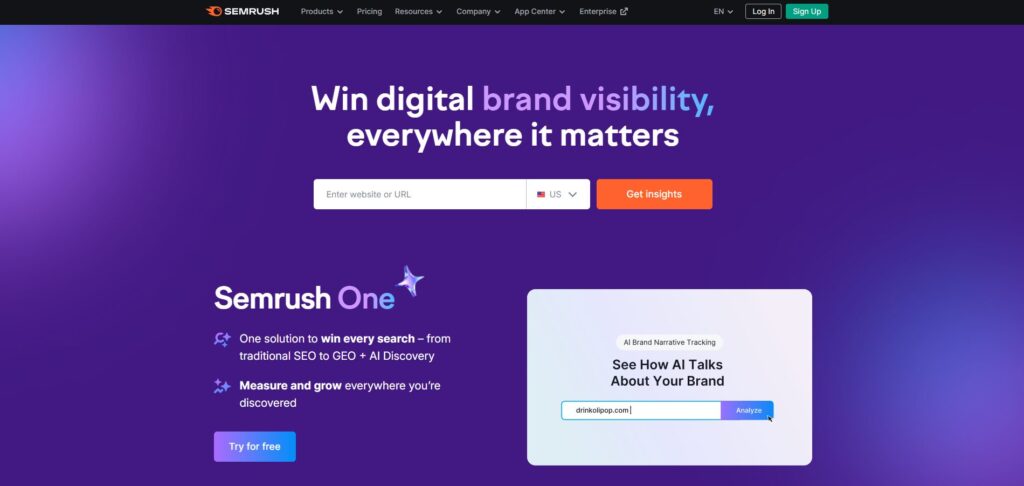
Semrush has evolved beyond classic SEO tooling into a search intelligence platform that covers:
- Traditional organic search,
- AI Overviews and SERP features,
- Competitor intelligence across markets,
- and content planning tied directly to business outcomes.
Why it wins in 2026:
- Tracks AI-driven SERP features and zero-click behavior
- Industry-leading keyword and domain databases
- Deep competitor analysis across organic, paid, and content, including analysis of top ranking pages to uncover content and keyword strategies
- Integrated content, social, and PPC workflows
What makes Semrush different now:
- Keyword research is no longer just about volume; Semrush emphasizes intent, SERP composition, and competitive density, helping you identify and optimize for your target keyword.
- Topic Research helps teams plan topical authority clusters, not isolated blog posts.
- The platform increasingly supports AI visibility analysis, helping marketers understand where content appears in AI-generated answers.
Best features:
- Keyword Magic Tool (intent + clustering)
- Topic Research & Content Planner
- AI Overview & SERP feature tracking
- SERP analysis tools for evaluating search engine results and assessing keyword competitiveness
- Site Audit & technical prioritization
- Competitive Domain Overview
Best for:
- Businesses building long-term organic visibility
- Agencies managing multiple clients
- Content teams scaling authoritative content
2. Ahrefs (Best for Backlinks & Competitive SEO)
Ahrefs continues to be the gold standard for backlink intelligence and competitive research.
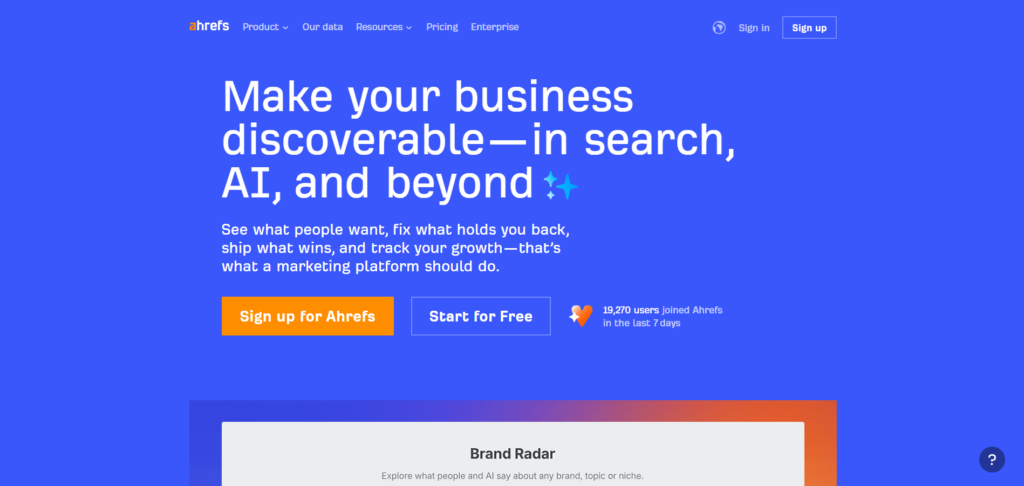
While it doesn’t try to be everything, Ahrefs excels at answering one critical question:
Why is this competitor outperforming us and how do we close the gap?
Why it matters in 2026:
- Backlinks still matter but context matters more than raw counts
- Ahrefs excels at identifying authority patterns, not just links
- Excellent data freshness and crawl depth
Where Ahrefs shines:
- Competitor backlink gap analysis
- Content gap discovery
- SERP history and ranking volatility
- Comprehensive SEO audit capabilities for site health and technical issues
Best features:
- Site Explorer
- Content Gap tool
- Backlink profile analysis
- SERP comparison over time
- Advanced keyword analysis tools for evaluating keyword competitiveness
Best for:
- Competitive industries
- Link-building focused strategies
- SEOs who want clean, fast data
3. Google Search Console (Still Non-Negotiable)
Google Search Console is still the only tool that shows you how Google actually sees your site, and it remains one of the essential Google tools for SEO.
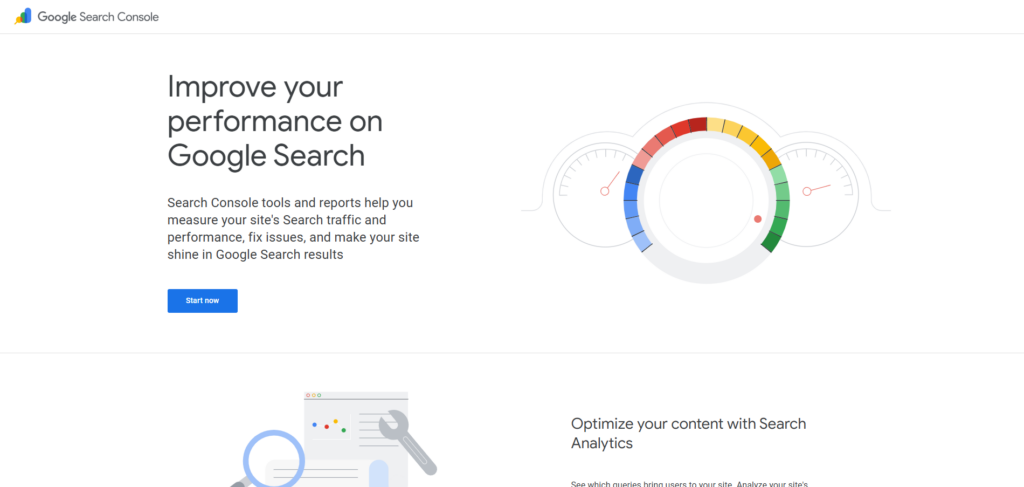
In 2026, its importance has increased, not decreased.
Why it’s essential:
- First-party data directly from Google
- Visibility into AI Overview impressions and clicks
- Indexation, crawling, and technical feedback
- Monitoring SEO rankings and site performance
What smart teams do with GSC:
- Use it as the source of truth for performance
- Combine it with third-party tools for context
- Monitor AI-related impression changes
Best for:
- Every website, regardless of size
4. Screaming Frog (Best Technical SEO Tool)
When SEO problems are technical, Screaming Frog is usually where answers come from.
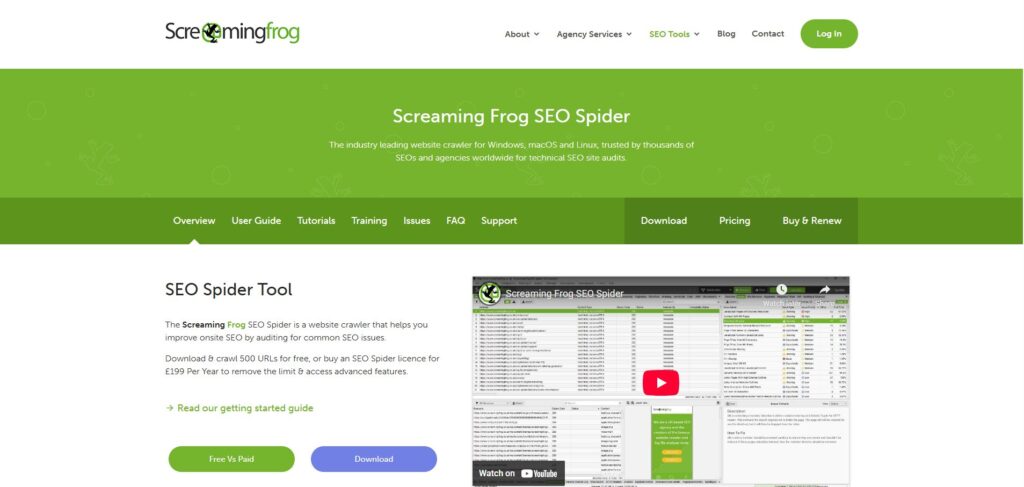
It remains the most trusted crawler for:
- diagnosing indexation issues,
- identifying structural problems,
- and auditing large, complex websites.
Why it still matters in 2026:
- AI search still relies on clean, accessible websites
- JavaScript-heavy sites need advanced crawling
- Technical SEO remains the foundation of visibility
Best features:
- Full-site crawling
- JavaScript rendering
- Custom extraction
- Integration with GSC & GA
Best for:
- Technical SEOs
- Large or complex sites
- Enterprise teams
5. Surfer SEO (Best Content Optimization Tool)
Surfer SEO connects content creation with real SERP data, excelling at on page SEO optimization by analyzing SERP data and content structure.
Instead of guessing what Google wants, Surfer analyzes what already ranks—and uses that to guide on page SEO optimization.
Why it matters in 2026:
- Content must align with intent, structure, and depth
- AI-generated content needs human-guided optimization
Best features:
- Content Editor with SERP-based scoring for on page SEO
- Outline and NLP suggestions
- Integration with writing workflows
Best for:
- Bloggers
- Content teams
- SEO-led content strategies
6. Clearscope (Best for Content Quality & E-E-A-T)
Clearscope is built for teams that care more about authority than shortcuts.
It’s less about gaming rankings and more about producing content that deserves to rank.
Why it matters:
- AI favors authoritative, well-structured content
- Clearscope pushes writers toward depth and clarity
Best for:
- Editorial teams
- High-authority brands
- Thought leadership content
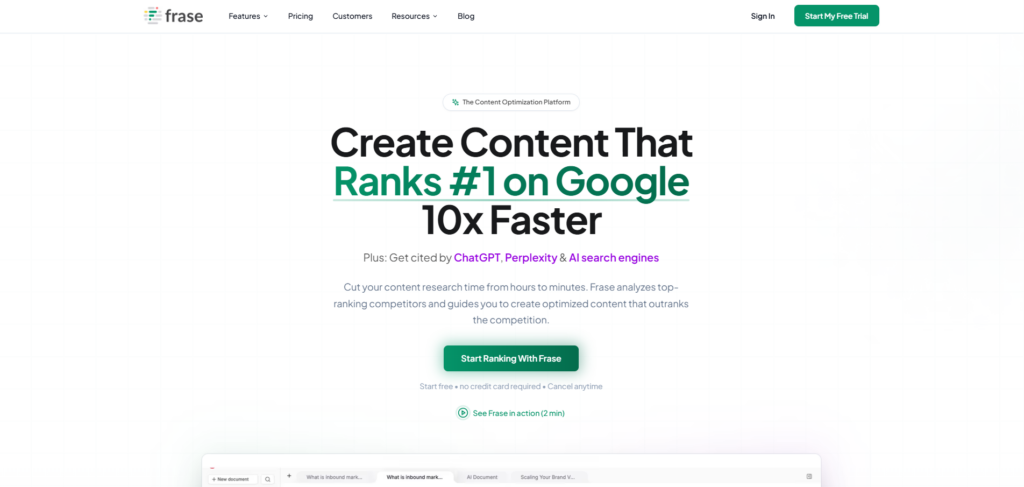
7. Frase (Best for Question-Based Content)
Frase excels at uncovering questions people actually ask—which makes it highly relevant for AI-driven search.
Why it matters in 2026:
- AI Mode prioritizes conversational queries
- FAQs and summaries feed AI answers
Best for:
- FAQ sections
- Conversational content
- AI-friendly summaries
8. Moz Pro (Best for Beginners & SMBs)
Moz remains one of the most approachable SEO tools on the market, ideal for users who want a gentle learning curve and accessible SEO features.
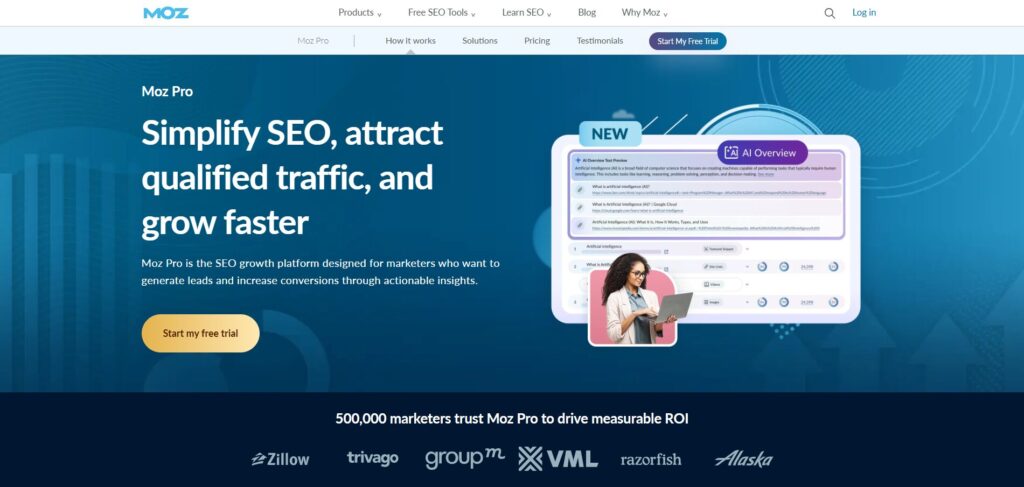
While it may not lead in raw data volume, it excels at education and clarity.
Best for:
- Small businesses
- SEO beginners
- Teams learning SEO fundamentals
9. SE Ranking (Best Value-for-Money SEO Tool)
SE Ranking offers a surprisingly strong feature set at a lower price point.
Why it matters:
- Accessible SEO tooling for growing teams
- Solid rank tracking and audits
Best for:
- Freelancers
- Startups
- Budget-conscious teams
10. Perplexity Pages / AI Search Monitoring Tools
This is the newest and fastest-growing category.
As AI-driven answers become mainstream, monitoring where and how your brand is cited is becoming critical.
Why it matters:
- Rankings don’t guarantee AI visibility
- Citation frequency does
Best for:
- Advanced SEO teams
- Brands preparing for AI-first discovery
11. Google Trends: Real-Time Search Insights
Google Trends is an essential resource for SEO professionals who want to stay ahead of shifting user search behavior.
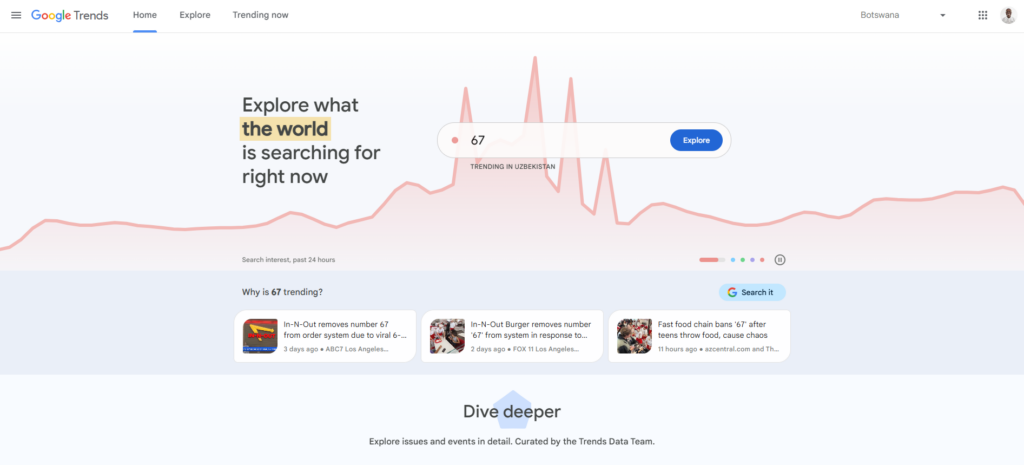
By providing real-time insights into search volume and trending topics, Google Trends helps you identify what your audience is searching for right now and how those interests are evolving.
You can compare keyword popularity, spot seasonal trends, and uncover related keywords that might otherwise go unnoticed.
Using Google Trends, you can refine your content strategy to target high-potential topics, fill gaps in your existing content, and ensure your website remains relevant in a fast-changing search landscape.
For anyone serious about search engine optimization, leveraging Google Trends is a smart way to align your content with what matters most to your audience.
12. Google Analytics: Measuring SEO Success
Google Analytics remains the backbone of SEO performance measurement. This powerful analytics platform enables SEO professionals to track website traffic, user engagement, and conversion rates with precision.
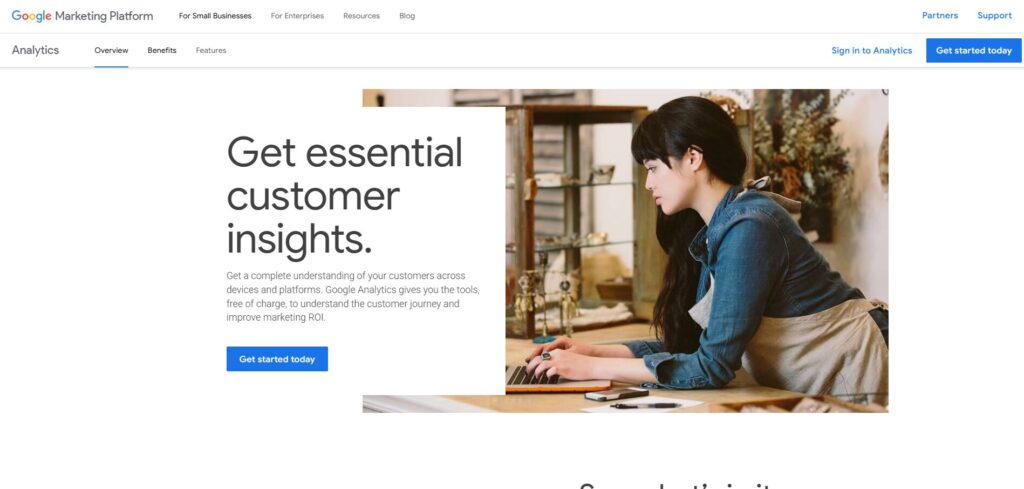
With advanced features powered by machine learning and AI, Google Analytics now delivers even deeper insights into how technical SEO improvements impact your site’s visibility and revenue.
By integrating Google Analytics into your SEO workflow, you can monitor keyword rankings, analyze your backlink profile, and assess the effectiveness of your content optimization efforts.
The platform’s robust reporting tools help you identify what’s working, what needs improvement, and where to focus your resources for maximum impact.
For anyone committed to data-driven search engine optimization, Google Analytics remains an indispensable tool for measuring and optimizing SEO success.
Final Thoughts: Tools Don’t Rank, Strategies Do
One final reminder.
SEO tools are leverage, not magic.
The teams winning in 2026 aren’t the ones with the biggest tool stack. They’re the ones that:
- understand how AI is changing discovery,
- use data to guide decisions (not overwhelm them),
- and build absolute authority through content and brand trust.
The right tools make this easier.
But strategy always comes first.
SEO tools don’t create results.
People using them correctly do.
In 2026, winning SEO is about:
- Understanding AI-driven search
- Creating authoritative content
- Building authentic brand signals
- Using tools as decision engines, not crutches
Choose fewer tools.
Use them better.
That’s how you win.